
Explore Fine and Gross Motor Skills
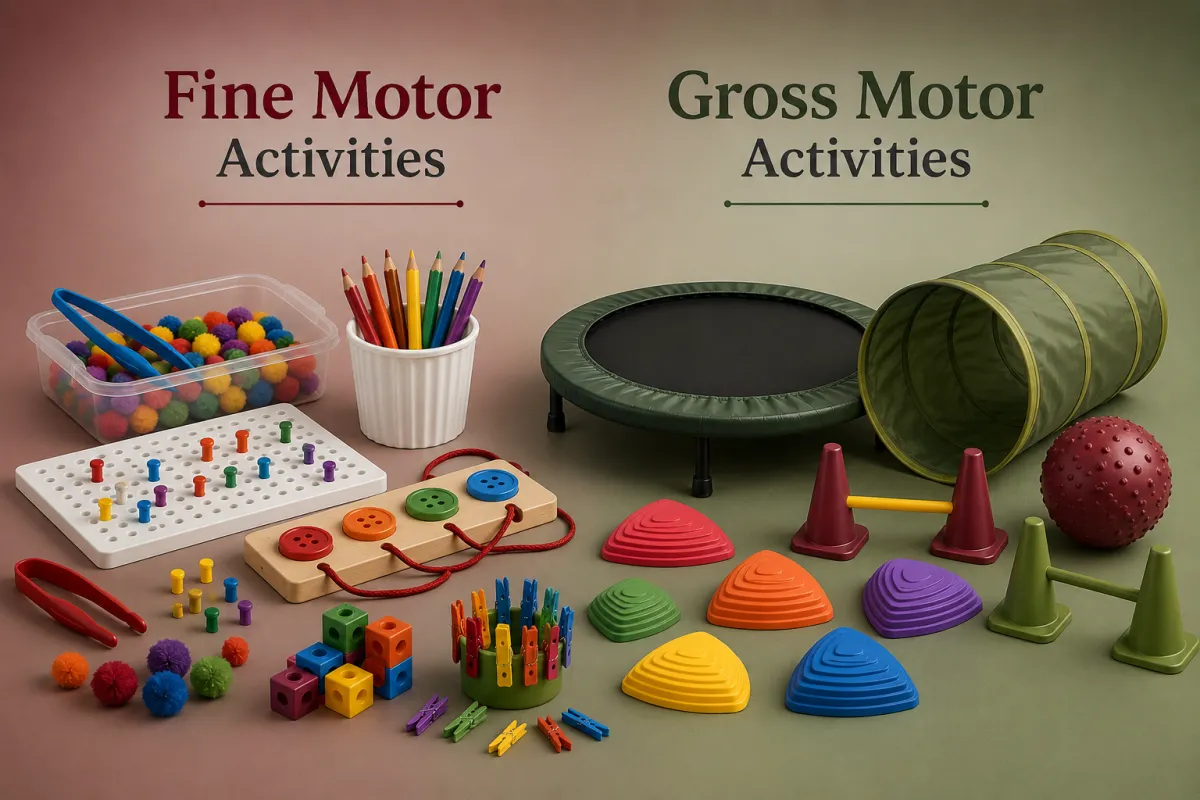
What are fine motor skills?
Fine motor skills involve the small, precise movements of the hands and fingers. These skills are essential for many everyday tasks, including:
Handwriting and drawing
Buttoning, zipping, and snapping clothing
Using utensils (fork, spoon, knife)
Cutting with scissors
Tying shoelaces
Opening containers and packages
Manipulating small objects (beads, coins, LEGO pieces)
Keyboarding and using a touchscreen
Fine motor skills depend on several underlying abilities working together: hand strength and grip, finger dexterity and in-hand manipulation, bilateral coordination (using both hands together), and visual-motor integration (coordinating what the eyes see with what the hands do).
What are gross motor skills?
Gross motor skills involve the large movements of the body using the arms, legs, and trunk. These skills are the foundation for physical activity, play, and independence. They include:
Walking, running, jumping, hopping, and skipping
Climbing stairs and playground equipment
Throwing, catching, and kicking a ball
Riding a bicycle or scooter
Balance and coordination during movement
Core stability — the trunk strength and control needed to sit upright, maintain posture, and support fine motor tasks
Body awareness (proprioception) — knowing where the body is in space
Gross motor skills provide the stable foundation that fine motor skills are built upon. A child who has difficulty with core stability or balance will often also struggle with fine motor tasks like handwriting.
What are signs that my child may have motor coordination difficulties?
Motor coordination problems affect approximately 5–6% of school-aged children. Signs may include:
Fine motor concerns:
Difficulty holding a pencil correctly or pressing too hard/too lightly
Messy, slow, or labored handwriting
Trouble with buttons, zippers, snaps, or shoelaces
Difficulty using scissors or utensils
Avoiding drawing, coloring, crafts, or other hand-based activities
Dropping things frequently or having a weak grip
Difficulty manipulating small objects (turning pages, picking up coins, stringing beads)
Gross motor concerns:
Appearing clumsy or uncoordinated — tripping, bumping into things
Difficulty learning new motor tasks (riding a bike, swimming, skipping)
Poor balance — falling frequently or avoiding balance activities
Difficulty with ball skills — catching, throwing, kicking
Trouble on playground equipment (climbing, swinging, monkey bars)
Slouching or leaning on the desk; difficulty sitting upright
Seeming to tire easily during physical activities
Avoiding sports or active play with peers
These difficulties often do not improve on their own over time and can affect academic performance, social participation, and self-esteem.
How does occupational therapy improve fine and gross motor skills?
Occupational therapy (OT) helps kids get better at everyday movements through fun, targeted activities.
Fine motor skills — the small movements of your hands and fingers — improve through activities like playing with clay, picking up small objects, and drawing.
Gross motor skills — the big movements of your whole body — get stronger through balance exercises, obstacle courses, and ball games.
It works because practicing these activities over and over builds stronger connections between the brain and body. Over time, things that once felt hard — like writing neatly or catching a ball — start to feel a whole lot easier!
Will my child outgrow motor coordination difficulties?
Research shows that motor coordination difficulties generally do not resolve on their own. Without intervention, these challenges tend to remain stable through adolescence and adulthood. Over time, children with untreated motor difficulties are at higher risk for:
Academic underperformance
Reduced physical activity and fitness
Social isolation and peer difficulties
Lower self-esteem and higher rates of anxiety and depression
Avoidance of sports and physical activities
Early identification and intervention are important. With appropriate OT, children can make significant and lasting improvements in motor skills and daily function.
Get In Touch

Serving Meadville and Surrounding Areas
MEDICAL DISCLAIMER:
All information on this website is intended for instruction and informational purposes only. The authors are not responsible for any harm or injury that may result. Significant injury risk is possible if you do not follow due diligence and seek suitable professional advice about your injury.
No guarantees of specific results are expressly made or implied on this website.
Copyright © 2026 All Rights Reserved by Bridging Roots Therapy.