
Explore Occupational Therapy and
School Success
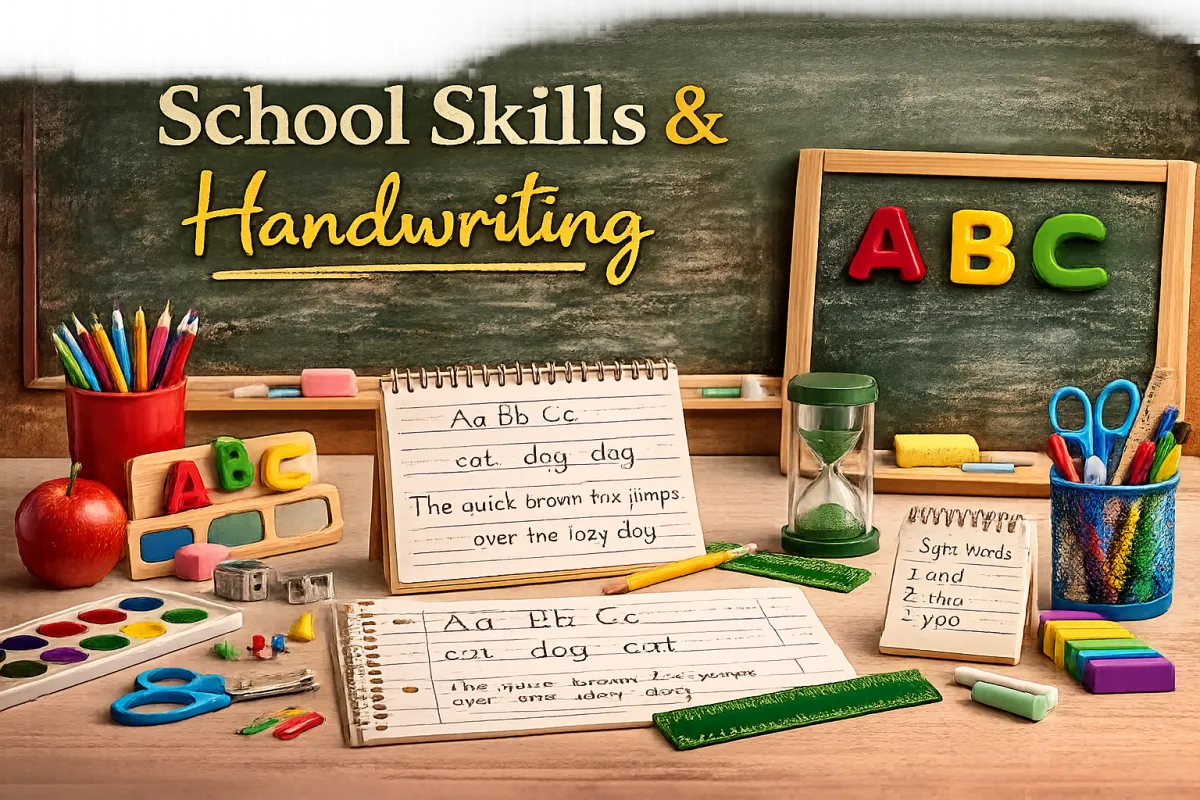
How does occupational therapy help my child with handwriting and using school tools?
Occupational therapists help kids build the hand strength and control they need to hold a pencil the right way, cut with scissors, and write neatly. They use fun activities to make hands and fingers stronger and more coordinated.
OTs also help kids get better at using their eyes and hands together — like copying words from the board or drawing shapes. This is a really important skill for handwriting. The best part is that kids practice these skills during real activities, like writing a story or working on a class project, not just boring drills.
My child has trouble staying focused and finishing schoolwork. Can occupational therapy help?
Yes! OTs teach kids tricks to help them pay attention, stay organized, and finish what they start. This might mean breaking a big assignment into smaller pieces, using a checklist, or following a step-by-step plan.
Kids also learn how to think through problems on their own — like figuring out what to do first, staying on track, and checking their work when they're done. They practice these skills during real activities like homework and classroom tasks, so they can use them every day at school. Studies show that learning these kinds of thinking skills really does help kids do better.
What does occupational therapy do for kids who get overwhelmed by noise or movement in the classroom?
Some kids are extra bothered by loud sounds, bright lights, or lots of movement around them. This can make it really hard to focus or feel okay at school. An OT can teach your child ways to handle all that input — like using headphones, taking movement breaks, or trying calming exercises.
Before trying anything, the OT takes time to figure out exactly what bothers your child and what helps them feel better. Every kid is different, so what works for one child might not work for another. The OT picks strategies that research shows actually work, watches to see if they're helping, and changes the plan if needed. It's all about finding what's right for your child.
Can occupational therapy help my child manage their emotions at school?
Absolutely. OTs teach kids how to notice what they're feeling and use simple tools to stay calm — like taking deep breaths, squeezing a stress ball, or stepping away for a quick break. These skills help kids handle frustration, changes in their schedule, and tricky social moments.
Here's something many parents don't know: the way a child handles sounds, touch, and movement is closely connected to how they handle their feelings. Kids who get overwhelmed by sensory stuff often have a harder time controlling their emotions, too. That's why OTs work on both at the same time. They might teach your child to notice if their body feels "revved up," "sluggish," or "just right" and then use a tool to get back to feeling balanced. Research shows this approach really helps kids feel calmer and more in control.
5. How can Occupational Therapy support my child's daily school routines?
Things like unpacking a backpack, switching between activities, getting through the lunch line, and packing up at the end of the day can be really tough for some kids. A private mobile OT comes to your child — wherever works best for your family — to help them learn and practice these routines using real-life activities.
The OT works with your child to figure out exactly where they get stuck during the day and builds a plan to help. For example, if your child has trouble moving from playtime back to focused work, the OT can practice that transition step by step. They can also suggest small changes — like how supplies are organized or how to use a visual schedule — to make routines easier and less stressful.
An OT also works as part of your child's team. They talk with teachers and parents to make sure everyone is using the same strategies and supporting your child in the same way. When the OT, teacher, and family are all on the same page, kids make more progress and feel more confident handling their day on their own. The goal is for your child to eventually do these routines independently — and practicing with real-life tasks is the best way to get there.
Get In Touch

Serving Meadville and Surrounding Areas

MEDICAL DISCLAIMER:
All information on this website is intended for instruction and informational purposes only. The authors are not responsible for any harm or injury that may result. Significant injury risk is possible if you do not follow due diligence and seek suitable professional advice about your injury.
No guarantees of specific results are expressly made or implied on this website.
Copyright © 2026 All Rights Reserved by Bridging Roots Therapy.