
Explore Primitive Reflexes and Vision
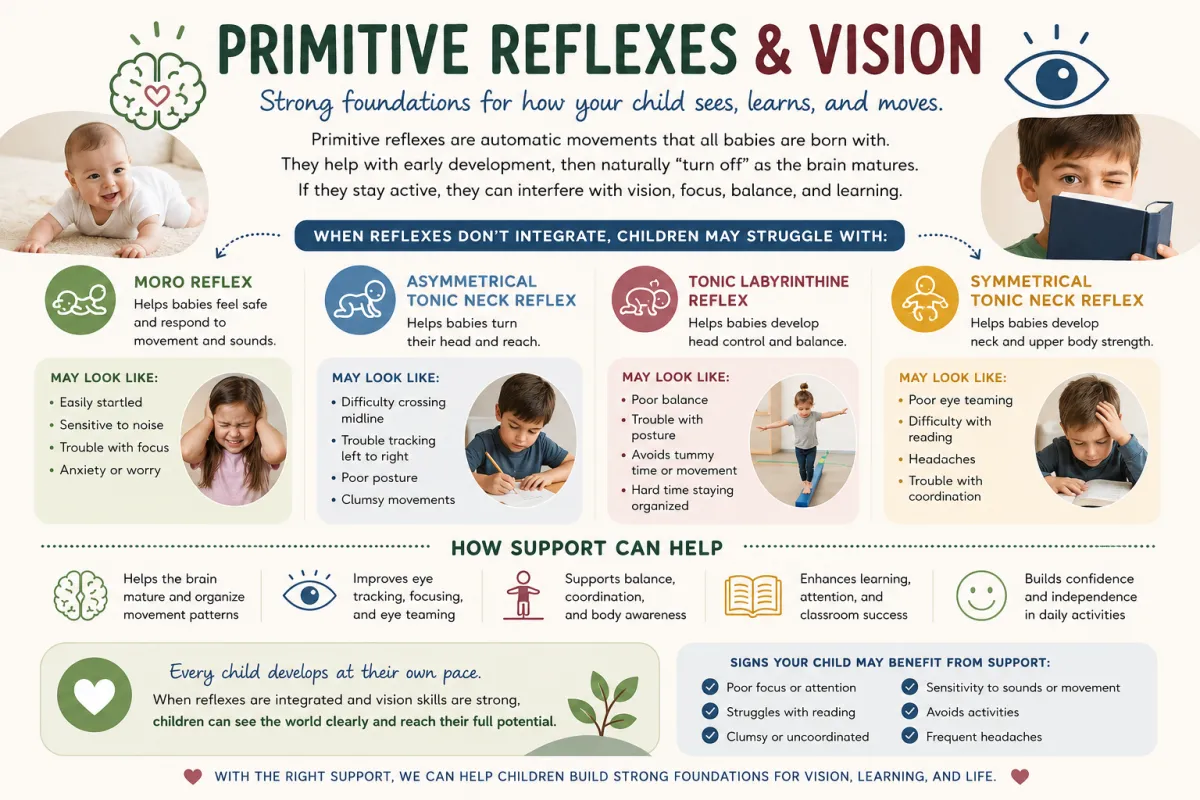
What are primitive reflexes?
Primitive reflexes are automatic movements that all babies are born with. They help babies survive and develop in the first months of life — things like turning the head, grasping, and startling. As a baby's brain grows, these reflexes are supposed to fade away, usually by the time a child is about 1 year old. When the brain takes over, the child can control their movements on their own. But sometimes, these reflexes don't fully go away. When that happens, they are called "retained" primitive reflexes, and they can get in the way of how a child moves, learns, and sees.
How can retained reflexes affect my child's vision?
When primitive reflexes stick around longer than they should, they can interfere with how the eyes and brain work together. This can cause problems with:
Eye tracking — Moving the eyes smoothly across a page while reading
Eye teaming — Getting both eyes to aim at the same spot at the same time
Focusing — Switching focus between far away (like a board) and up close (like a desk)
Visual-spatial skills — Understanding where things are in space, like reading a clock or judging distances
Hand-eye coordination — Using what the eyes see to guide the hands for writing or catching
These problems happen because the old reflex movements compete with the newer, more controlled movements the brain is trying to make.
What signs might I see if retained reflexes are affecting my child's vision?
You might notice your child:
Losing their place or skipping lines while reading
Having trouble copying from the board
Tilting or turning their head while reading or writing
Struggling with handwriting or spacing on the page
Having trouble catching a ball or judging distances
Fidgeting or having a hard time sitting still at a desk
Being bothered by bright lights or busy, crowded spaces
Struggling with puzzles, mazes, or telling time on a clock with hands
Many of these signs overlap with functional vision problems, so it can be hard to tell the difference without a proper evaluation.
How can Occupational Therapy help with retained primitive reflexes?
If a child's primitive reflexes don't go away on their own, an occupational therapist can help. OTs use fun activities and exercises that train the brain to move past these early reflexes. Over time, this can improve things like balance, coordination, focus, and handwriting — making everyday tasks at school and home feel a lot easier.
Get In Touch
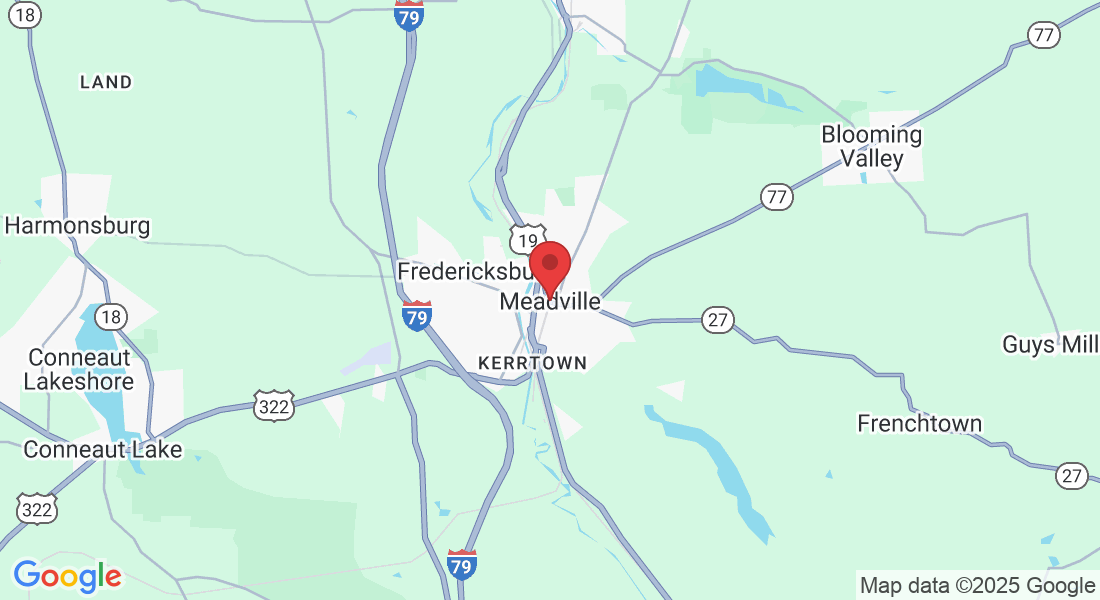
Serving Meadville and Surrounding Areas
MEDICAL DISCLAIMER:
All information on this website is intended for instruction and informational purposes only. The authors are not responsible for any harm or injury that may result. Significant injury risk is possible if you do not follow due diligence and seek suitable professional advice about your injury.
No guarantees of specific results are expressly made or implied on this website.
Copyright © 2026 All Rights Reserved by Bridging Roots Therapy.